Select your language
Saltar al contingut Saltar a la navegació Informació de contacte

Invocación
St Petersburg (Russia)
St Petersburg (Russia)
Madrid
Madrid
Madrid
Madrid
Madrid
Madrid
Madrid
Madrid
Madrid
Madrid
Madrid
Dubái
Logroño
Torrejón de Ardoz (Madrid)
Torrejón de Ardoz (Madrid)
Valencia
Valencia
Valencia
Valencia
Toledo
Granada
Granada
San Luis Potosí
San Luis Potosí
León, Guanajuato
León, Guanajuato
Morelia Michoacán
Morelia Michoacán
Guadalajara, Jalisco
Guadalajara, Jalisco
Monterrey, Nuevo León
Puebla
Ciudad de México (CDMX)
Ciudad de México (CDMX)
Ciudad de México (CDMX)
Ciudad de México (CDMX)
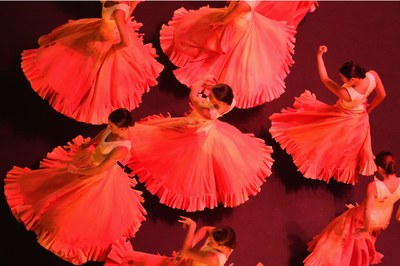
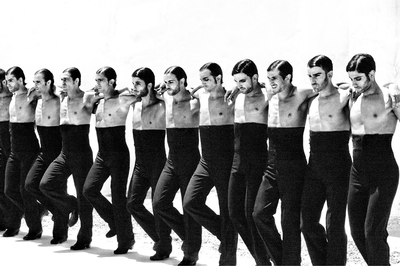
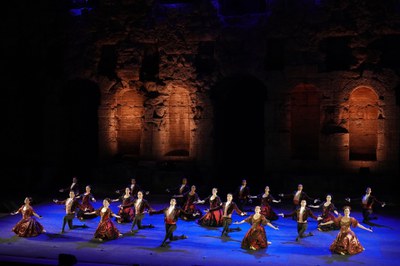
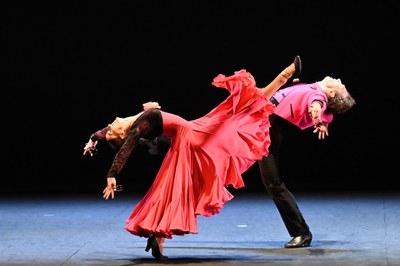
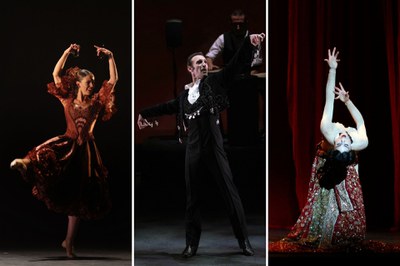
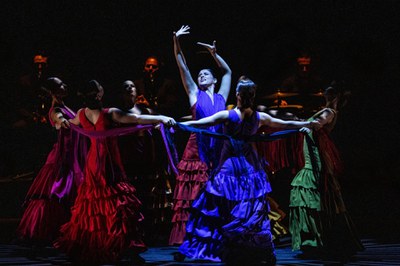
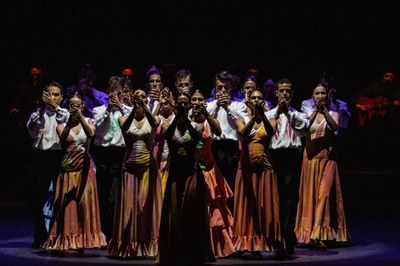
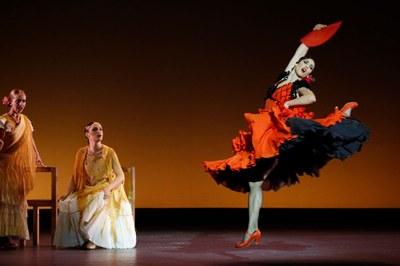
The first program designed by Rubén Olmo as director of the Ballet Nacional de España offers a global vision of Spanish Dance, covering most of its styles, from the Escuela Bolera to stylized dance and stylized flamenco.
It also includes a special tribute to the dancer and choreographer Mario Maya (1937-2008), one of the great masters of Spanish Dance, who, despite being one of the creators of the Andalusian Flamenco Theater with his own unique style, was not until now included in the repertoire of the Ballet Nacional de España.
MUSIC AND CHOREOGRAPHY
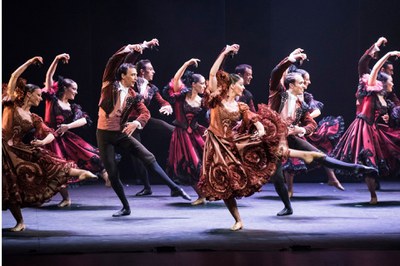
It is a newly created choreography by Rubén Olmo. Apart from being one of the few recent compositions in this style, it is also a tribute to the great masters who set down the guidelines to be followed in Escuela Bolera, from Ángel Pericet to Mariemma or Antonio el Bailarín.
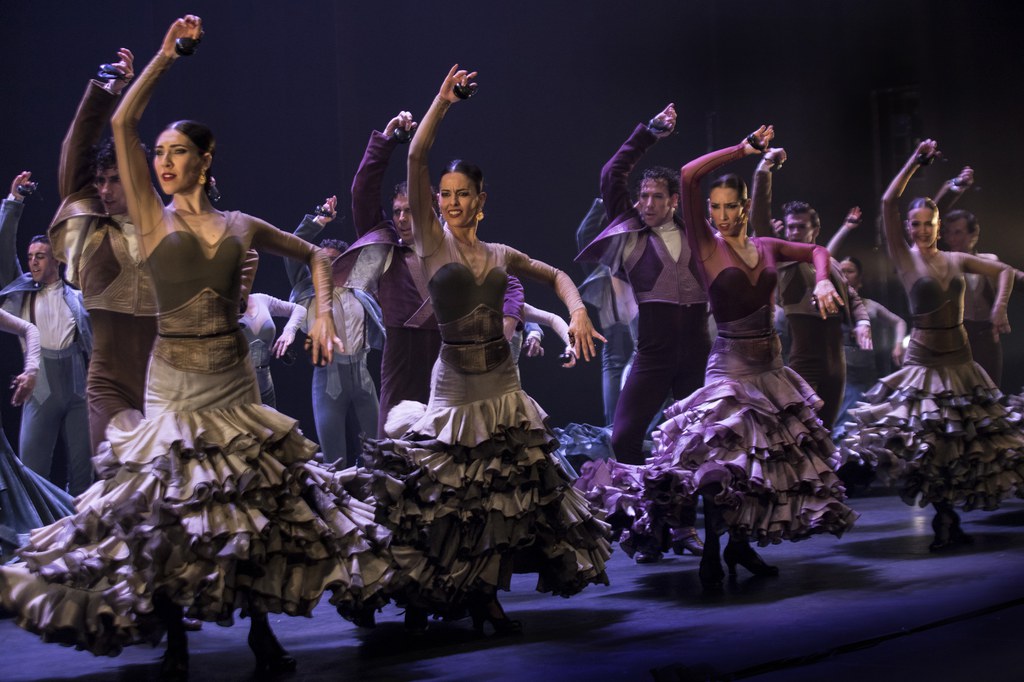
Invocación bolera updates the essence of the traditional escuela bolera. It emerged in Spain in the 18th century out of the combination of Andalusian popular dances and academic dances. It is one of the most distinctive, complex, and unique styles of Spanish dance, characterized by the use of castanets.
The music is also a contemporary original composition specific for this piece, a commission from the Ballet Nacional de España to the young Sevillian composer and conductor Manuel Busto.
COSTUMES
The costumes for Invocación bolera are a handmade work of art that is rich and complex because of the handcrafted laces, embroideries, and thread work. The design is by Pedro Moreno, who created them for José Antonio Ruiz’s choreography Fandango del Padre Soler, premiered by the Ballet Nacional de España in 1988. Pedro Soler was also tasked with adapting the designs for Invocación bolera.
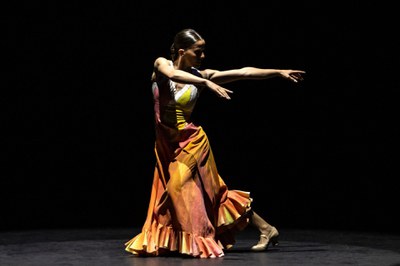
“Jauleña is a choreography that I created as a transition solo. I based myself on a village in Granada that brings together three cultures: Christian, Jewish and Arab. In this solo I combine three disciplines of Spanish dance: stylised dance, escuela bolera, and flamenco”.
Rubén Olmo
Jauleña is a bridge between escuela bolera, stylised dance, and flamenco. A solo inspired by Granada, performed by Rubén Olmo, where the granaína and zapateado styles take centre stage.
“When I listened to the score, full of melodic and rhythmic nuances plus overwhelming force, I felt immensely inspired to create a traditional choreography that would portray my personal view on Spanish dance, more specifically, on stylised dance”.
Antonio Najarro
MUSIC AND CHOREOGRAPHY
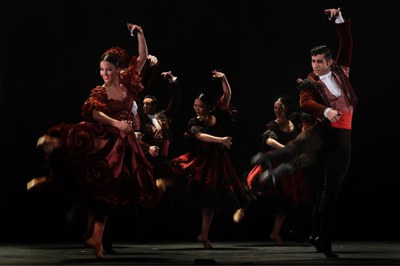
Eterna Iberia comes from the discovery of the wonderful work of maestro Moreno Buendía, Celtiberia, which Antonio Ruiz Soler ‘El Bailarín’ commissioned in 1963 to create his ballet Eterna Castilla.
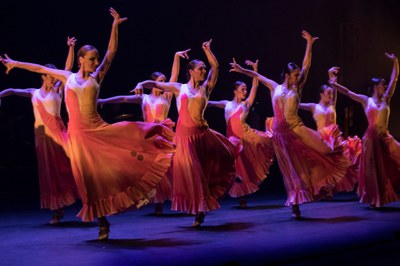
The ballet Eterna Iberia flows through five movements, represented in group numbers, solos, and pas de deux, that combine the use of castanets, the Spanish cape, and the Cordovan hat, as well as the technique and the interpretative strength so characteristic of our stylised dance.
An insight into the stylistic form of our roots, our essence, that translates into more modern dance forms.
COSTUME AND LIGHTING
This message is supported by the costume design of Yaiza Pinillos, who sought to give the costumes that mixture of classicism and sophistication, portraying the wealth of our country through three colours that refer to three elements: sea, olive, and wine, implemented through an innovative technique of applying mordant and pigments to dye the outfits.
The lighting design by Nicolás Fischtel gives every single movement of the work the ideal atmosphere, highlighting their expressive and aesthetic message.
The Ballet Nacional de España wishes to pay tribute to dancer and choreographer Mario Maya (1937-2008), one of the great masters of Spanish dance, who despite being a creator of a unique style of his own had not been included in our repertoire.
“Questioning traditional thought is always the starting point to gain new knowledge. Cultural tradition has to persevere in a vigorous, constant process to keep its status of ‘art’ and adapt it to the new social needs and conditions. Deep socioeconomic and cultural changes encourage me to seek new forms of expression as the only way to avoid the decay into folklore merchandise. Art is no ritualised memory. Art is a conception of life and a symbolic challenge to man. “Beat plus shout or shouting on beat”.
MARIO MAYA
The Ballet Nacional de España pays tribute to Mario Maya, a brilliant bailaor, choreographer, and master who passed away in 2008. Mario Maya is a leading figure in the world of Spanish dance because of his genius and sensitivity. A groundbreaking artist, he staged bold productions and created an artistic school that includes registros of dancer and bailaor at the same time.
De lo flamenco is defined as a flamenco suite that portrays Mario Maya’s own style, who in 1994 founded the Compañía Andaluza de Danza, present-day Ballet Flamenco de Andalucía. The programme Mario Maya premiered that year was a leap forward, a breath of fresh air that was different from the flamenco performed up till then. Even now it is still innovative and completely different from anything else.
“Master Mario was a tireless researcher in everything to do with this art, a global and Flamenco Teatro Andaluz leading dancer, creator of a unique, very personal style. That’s why, I believe that the Ballet Nacional de España had to include one of his works in its repertoire”
RUBÉN OLMO
St Petersburg (Russia) Teatro Casa Báltica
St Petersburg (Russia) Teatro Casa Báltica
Madrid Teatro de la Zarzuela
Madrid Teatro de la Zarzuela
Madrid Teatro de la Zarzuela
Madrid Teatro de la Zarzuela
Madrid Teatro de la Zarzuela
Madrid Teatro de la Zarzuela
Madrid Teatro de la Zarzuela
Madrid Teatro de la Zarzuela
Madrid Teatro de la Zarzuela
Madrid Teatro de la Zarzuela
Madrid Teatro de la Zarzuela
Dubái Jubilee Stage
Logroño Teatro Bretón
Torrejón de Ardoz (Madrid) Teatro José María Rodero
Torrejón de Ardoz (Madrid) Teatro José María Rodero
Valencia Palau de les Arts Reina Sofía
Valencia Palau de les Arts Reina Sofía
Valencia Palau de les Arts Reina Sofía
Valencia Palau de les Arts Reina Sofía
Toledo Teatro Auditorio El Greco
Granada Teatro del Generalife
Granada Teatro del Generalife
San Luis Potosí Centro Cultural Universitario Bicentenario
San Luis Potosí Centro Cultural Universitario Bicentenario
León, Guanajuato Fórum Cultural Guanajuato Teatro del Bicentenario Roberto Plasencia Saldaña
León, Guanajuato Fórum Cultural Guanajuato Teatro del Bicentenario Roberto Plasencia Saldaña
Morelia Michoacán Teatro Morelos de Morelia
Morelia Michoacán Teatro Morelos de Morelia
Guadalajara, Jalisco Conjunto Santander de Artes Escénicas. Sala Plácido Domingo
Guadalajara, Jalisco Conjunto Santander de Artes Escénicas. Sala Plácido Domingo
Monterrey, Nuevo León Auditorio Pabellón Monterrey
Puebla Teatro Metropolitano de la Explanada
Ciudad de México (CDMX) Sala Principal del Palacio de Bellas Artes
Ciudad de México (CDMX) Sala Principal del Palacio de Bellas Artes
Ciudad de México (CDMX) Sala Principal del Palacio de Bellas Artes
Ciudad de México (CDMX) Sala Principal del Palacio de Bellas Artes