Select your language

Saltar al contingut Saltar a la navegació Informació de contacte
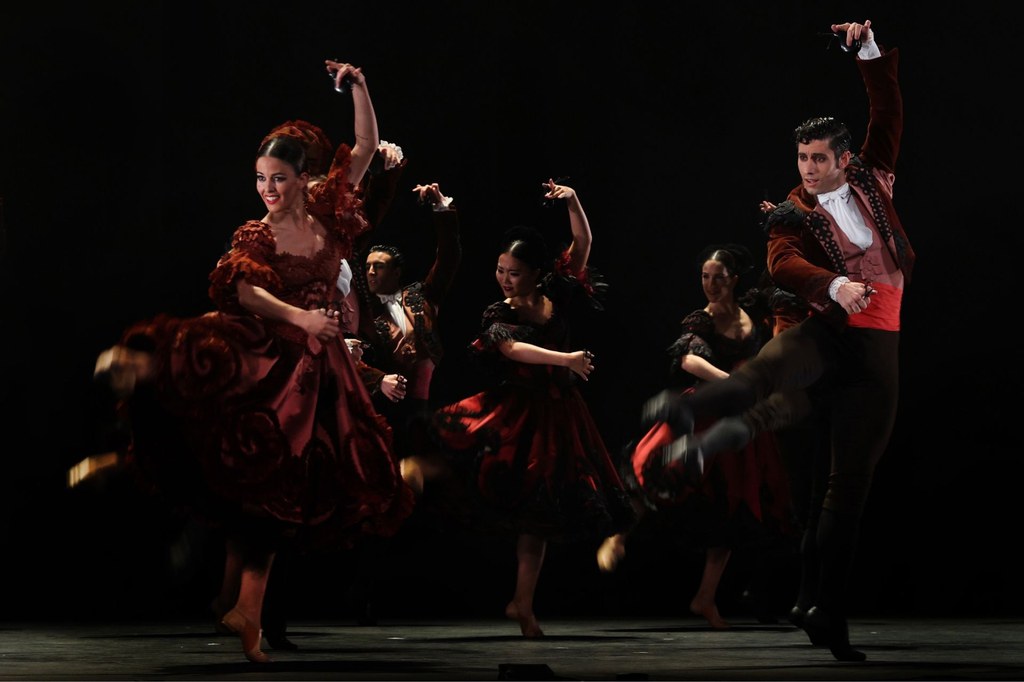
The richness of the different styles of Spanish dance will travel to the United Arab Emirates through 'Invocación¡, the program we will perform on February 2nd, Spain Day, on the Jubilee Stage at the Expo 2020 Dubai site. Our director, Rubén Olmo, will also perform the solo 'Jauleña' in Al Wasl Plaza. The Ballet Nacional de España thus joins the wide-ranging cultural program organized by the Spain Pavilion and Acción Cultural Española (AC/E) to promote Spanish culture and Spain's image abroad as part of this international event, which runs until March 31st, 2022.
“Invocación is a very complete program in which audiences can enjoy flamenco full of life and strength on stage, a ballet of the purest stylized dance, and one of the few recent choreographies in the escuela bolera style”, says Rubén Olmo. The solo Jauleña is also part of this program, a piece that explores how far the fusion of contemporary dance, stylized dance and flamenco can go. Created by the BNE director, with music by Manuel Busto, it will be performed by Rubén Olmo as part of the official events scheduled for Spain Day at Expo 2020 Dubai.
This program offers the opportunity to introduce international audiences to the work of one of the great creators of Spanish dance: Mario Maya, the dancer, choreographer and director who changed the aesthetics and concept of flamenco. Until his death in 2008, Mario Maya was the link between traditional and contemporary flamenco, and his creativity and way of working inspired a generation of flamenco artists who are today at the very top of this art form.
As a tribute to the Granada-born artist, Rubén Olmo has chosen the suite De lo flamenco to form part of the Invocación program because it brings together a wide range of flamenco registers, from classicism to baroque richness and the avant-garde. “Mario Maya’s repertoire fits very well with the Ballet Nacional de España because he choreographed for large groups of dancers”, adds Rubén Olmo. The version performed by the BNE includes two new choreographies added to the original work, premiered by the Andalusian Dance Company — now the Ballet Flamenco de Andalucía — in 1994: Romance del emplazado, by Rafaela Carrasco, and Taranto, by Isabel Bayón. In the remaining choreographies, the aim has been to remain faithful to Mario Maya’s creation, from the costumes to the music composed by Diego Carrasco, Jesús Torres, Moraíto Chico and Los del Río.
Flamenco is the most popular of the styles included in Spanish dance, but it is not the only one. Escuela bolera, a discipline that combines classical dance techniques with popular dances from the 18th century and mastery of the castanets, or palillos, also has a place in this program. Invocación bolera, by Rubén Olmo, is one of the few choreographies in this style to have been created recently. The BNE director drew inspiration from the great masters of escuela bolera and from what his own teachers taught him, creating a highly personal escuela bolera choreography with a contemporary style. The music is an original contemporary composition commissioned by the Ballet Nacional de España from the young Sevillian composer and conductor Manuel Busto. The costumes were designed by Pedro Moreno for the work Fandango del Padre Soler, premiered by the Ballet Nacional de España in 1988, and have been adapted by the designer himself for this work.
The Invocación program is completed by Eterna Iberia, one of the purest ballets of stylized Spanish dance, created by Antonio Najarro for the Ballet Nacional de España in 2019. The cape and Cordovan hat, enhanced by costumes designed by Yaiza Pinillos, take center stage in a ballet that recovers the musical score composed by Manuel Moreno-Buendía for Eterna Castilla, by Antonio Ruiz Soler, and later published as a suite under the title Celtiberia.
We premiered Invocación on March 7th, 2020, at the Festival de Jerez, and have performed this program in Madrid, Saint Petersburg, Santander, Pamplona, Zaragoza, Albacete, Terrassa in Barcelona, and Pozuelo de Alarcón in Madrid. After Dubai, it will soon be seen in Logroño, Torrejón de Ardoz in Madrid, and Valencia, among other cities.