Select your language
Saltar al contingut Saltar a la navegació Informació de contacte

El amor brujo
Madrid
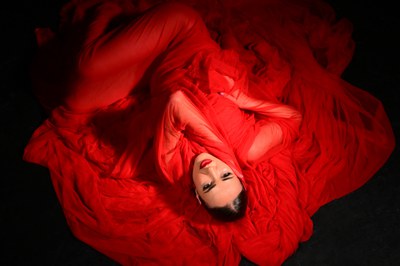
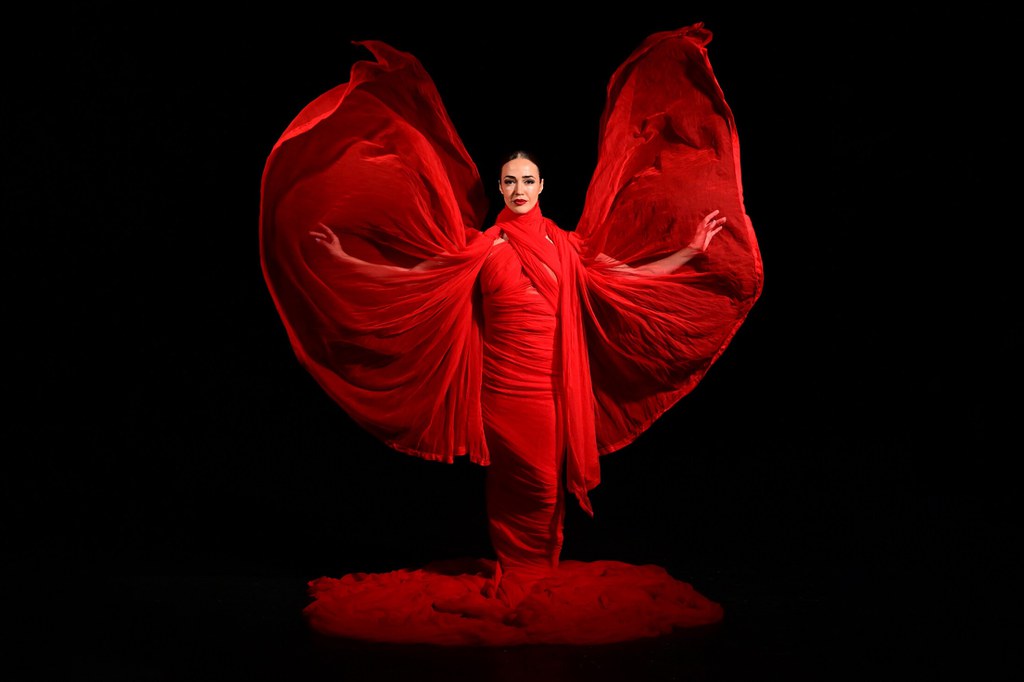
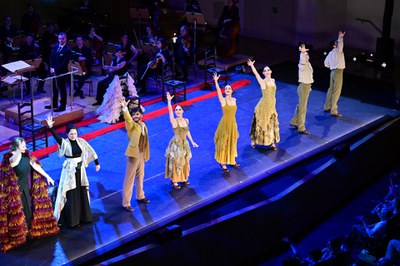
Songs, spells, dances, love... Rubén Olmo – director of the Ballet Nacional de España – presents a more contemporary and personal take on Falla’s classic in this new ballet adaptation of El amor brujo.
FOR THE WHOLE FAMILY: Manuel de Falla – Come on, come on!...
Come on, come on!...
During his final years in Paris, Manuel de Falla met the married couple Gregorio Martínez Sierra and María de la O Lejárraga. Thanks to this connection, upon his return to Madrid, Falla collaborated on the creation of a new repertoire piece for the flamenco dancer Pastora Imperio for the 1914–1915 season at the Teatro Lara: El amor brujo.
Halfway between a monodrama, a ballet and a concert suite, El amor brujo is one of the most iconic scores in the Spanish orchestral repertoire, and its ‘Ritual Dance of Fire’ is its most popular movement. Rewritten on numerous occasions – between 1915 and 1925 – in various formats, the work is constantly open to creation and reinvention, as well as to collaboration with artists with flamenco roots.
“Love must be set free, allowed to flow. You have to feel its freedom. It is a nod to the freedom of love. Everything remains where it should be. In free and true love.”
Rubén Olmo
Songs, spells, dances, love… Rubén Olmo proposes a more personal and contemporary vision on the renowned work by Falla with this new ballet. Halfway between monodrama, ballet and concert suite, El amor brujo is one of the most representative compositions of the Spanish orchestral repertory and its Danza ritual del fuego, its most popular piece. Rewritten many times from 1915 to 1925 in different formats, this work is always open to creation, reinvention and collaboration with flamenco-rooted artists, as well.
To Rubén Olmo, “this new ballet is a metaphor about love”. He talks about the freedom to love and the different ways it takes through the characters of El amor brujo. In his opinion: “Love can not be controlled. We have to leave love free, let it flow. We must feel its freedom, as everything stays where it´s meant to be: in the free and true love”.
Ballet Nacional de España
Rubén Olmo, director
Orquesta Nacional de España
Josep Gil, director
María Toledo, flamenco singer
Ana Hernández Sanchiz, narrator
El amor brujo
Choreography: Rubén Olmo
Music: Manuel de Falla
Libretto: María de la O Lejárraga
Lighting: Juan Gómez Cornejo
Rehearsal coach: Maribel Gallardo
Costumes
Dancers: costumes for El loco, costume design: Jesús Ruiz, costume production: Ana Lacoma, Josep Ahumada, González, Maty and Adame.
Narrator: costumes for La Bella Otero, design: Yaiza Pinillos, costume production: Cornejo.
Flamenco singer: costumes for El corazón de piedra verde, costume design: Yvonne Blake
Footwear: Gallardo
Cast
Sorceress: Inmaculada Salomón
Candelas: Débora Martinez
Lucía: Irene Tena
Spectre: Eduardo Martínez
José: José Manuel Benítez
Carmelo: Albert Hernández
Candelas, a young and beautiful gypsy woman, was passionately in love with a dissolute and jealous gypsy man who was stabbed to death in a brawl. Tormented by the spirit of her former lover, she turns to a sorceress to cast spells that will set her free.
Carmelo, a young gypsy man, loves Candelas, but she does not return his feelings, as she is still possessed by the spirit of her lover. The Sorceress, in agreement with Lucía—a friend of Candelas and Carmelo who was also a friend of the Spectre—decides to use her arts to free her, convening a Magic Circle where Candelas performs the Ritual Dance of Fire to drive away the evil spirits; despite this, Candelas remains under the Spectre’s influence. Carmelo suggests to Lucía that she use her charms to seduce the Spectre; Lucía, following his advice, agrees and ends up making him fall in love with her, thus managing to draw him away from Candelas. The lovers kiss and triumph over the Spectre’s evil influence, and he disappears forever, vanquished by love.
Madrid Auditorio Nacional. Sala Sinfónica.