Select your language
Saltar al contingut Saltar a la navegació Informació de contacte

Centenary Antonio Ruiz Soler
Murcia
Madrid
Madrid
Madrid
Madrid
Jerez
Jerez
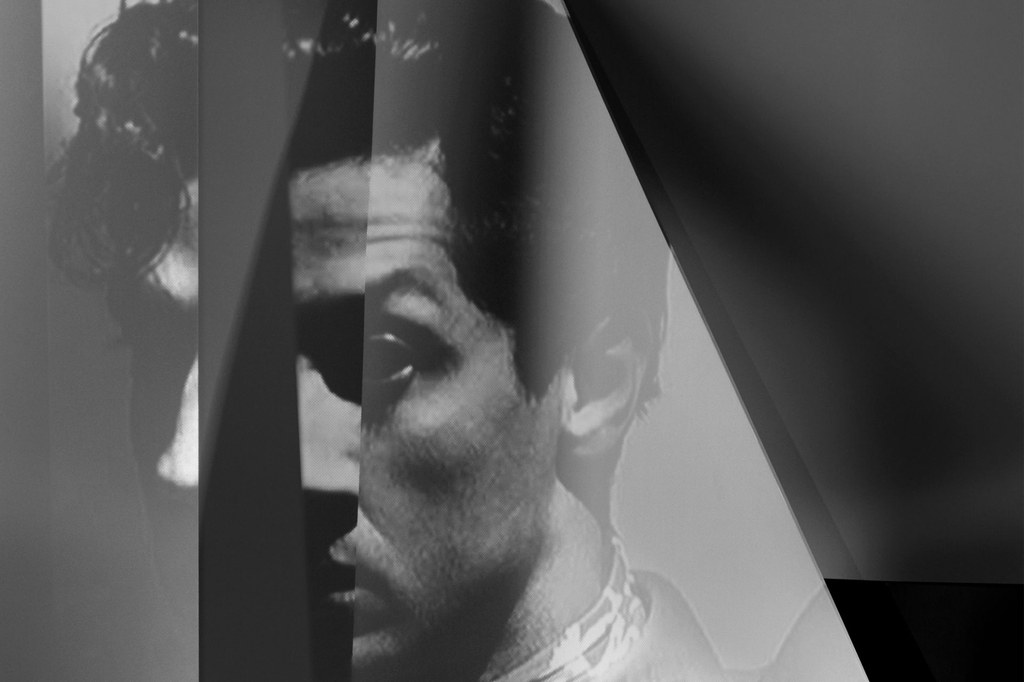
Antonio Ruiz Soler (1921-1996) is one of the dancers and choreographers who has most influenced the evolution of Spanish dance in the 20th century. On the occasion of 100th anniversary of the birth of the former director of Ballet Nacional de España (1980 to 1983), the public company has designed a programme that includes productions that are loyal to the key original pieces of his career in addition to creations inspired by his style.
Although Antonio Ruiz Soler’s choreographies have been performed under all the directorships, Eritaña, El sombrero de tres picos, Fantasía galaica and Sarasate’s Zapateado being the most popular, Sonatas has not been back on the stage in full since it was first put on at the Teatro de la Zarzuela in 1982 and then toured.
The Centenario Antonio Ruiz Soler show also includes under the title Estampas flamencas, the flamenco palos that Antonio often performed with his company in new choreographies created by Rubén Olmo and Miguel Ángel Corbacho. “Our intention has been to continue the style and aesthetics of Antonio and of 1950s and 60s flamenco, updating the steps. So, we are presenting a Martinete, Zorongo, Taranto and Caracoles to stir up his memory in the audience”. Rubén Olmo particularly highlights the Martinete, choreographed by Miguel Ángel Corbacho. Antonio was the first person to dance this flamenco style, which up till then had only been used in cante [singing], and he was always the one who performed it on stage. The piece to be premiered by the Ballet Nacional de España, featuring 11 dancers, stresses the soberness of male dance in traditional flamenco.
The overview to Antonio’s artistic career is rounded off with the solo Leyenda, a choreography created by Carlos Vilán for Isaac Albéniz’s composition Asturias, which is again an essential piece in Antonio Ruiz Soler’s shows. Carlos Vilán was first artist in María Rosa’s company when in the 1990s Antonio created for her El Rocío, among other choreographies. The maestro’s collaborator in his last years conceived Leyenda in 2016 especially for Esther Jurado, guest principal dancer of the Ballet Nacional de España, which included it in its repertoire.
Antonio’s career in film is not overlooked either, nor are the years he lived between New York and Hollywood with his artistic partner Rosario. Rubén Olmo recreates, together with Miriam Mendoza, Ballet Nacional de España soloist, the pas de deux Vito de gracia which Rosario and Antonio performed in the film Hollywood Canteen in 1944. This way, the programme honours the artist who accompanied him in his early days at Realito academy in Seville, when he was a child and until he set up his own company in 1953.
In 1952, the director Edgar Neville asked Antonio to prepare an original choreography for the film Duende y el misterio del flamenco (titled Duende in English). Not only did it feature the first ever dance routine set to a martinete, it also included a first (and shorter) version of the Sonatas, one of the most successful works of Soler Senior’s latter career. In this first version, it was already evident that his bolero influences broke with the tenets of the traditional school, from the dance steps to the arm motions, from the drumbeat to the Goyaesque aesthetic. The bolero school that Antonio presented within a palatial stage set, with infantas, courtesans and halberdiers, represents a combination of bolero and highly technical classical dance. A year later, for his Antonio Ballet Español company’s first programme, he included all eight sonatas in the suite, performed by the whole company of 35 dancers over the course of several scenes. This debut took place at the Festival Internacional de Música y Danza de Granada, in the Generalife Gardens.
In the 1940s, when Rosario and Antonio lived and worked in the United States, the couple appeared in several Hollywood musicals. One of these was Hollywood Canteen (1944), written to boost the morale of soldiers fighting in the Second World War. In the film we hear an orchestral adaptation of El Vito, a type of traditional Andalusian music – and the dance number that accompanies it gives an insight into the shows that the couple toured America with: a rapid intertwining of spins and taps that prized spectacle over technique. Rubén Olmo has chosen this dance as a nod to Antonio Ruiz Soler’s cinematographic side, which would continue in Spain with his career as a leading actor.
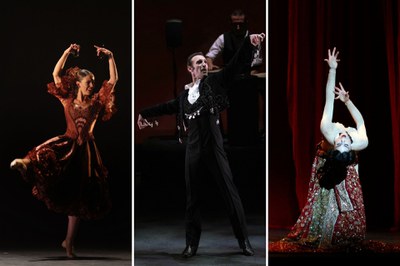
Rubén Olmo and Miguel Ángel Corbacho have created four pieces inspired by Antonio Ruiz Soler’s style, aesthetic and character. These choreographies run through the history of traditional flamenco, all the way from its origins, a progression that is reflected in both the costumes and the music. This journey through the song, dance and music of primordial flamenco passes through the flamenco palos that are often found in Antonio’s work: the zorongo, the martinete, the taranto and the caracoles. It follows the blueprint for set design that he used in his flamenco performances, but with more modern choreography.
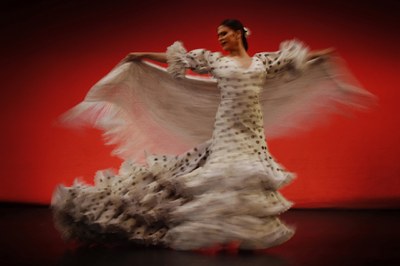
When Esther Jurado, leading guest dancer of the Ballet Nacional de España, asked the Argentinian choreographer and dancer Carlos Vilán to create a classical Spanish choreography for her, he pictured her in bata de cola dress, dancing to the score of Asturias de Albéniz – without even knowing that her mother was Asturian. He named this choreography Leyenda and first unveiled it at the gala of the Bucharest Opera in 1998.
As Director of the Ballet Nacional de España, Rubén Olmo wanted to include it in this programme because Albéniz’s composition was a staple in the repertoire of Antonio’s Ballet, although in those days it was performed by a male dancer. For Olmo, Carlos Vilán’s creation was a good fit for the programme because the choreographer had a deep understanding of the style of the maestro. Carlos Vilán worked closely with Antonio as répétiteur for El Rocío, a work that María Rosa originally commissioned from Antonio for her company.
Antonio Ruiz Soler’s interpretation of Pablo Sarasate’s score boosted his profile as a dancer and choreographer, and it became one of the mainstays of his repertoire from its debut in 1946 at the Teatro Bellas Artes in Buenos Aires. The influence of claque on the technique of this particular zapateado makes it a perfect example of virtuosic, stylised flamenco. In 1959, Antonio performed a version of this solo as he walked down a country road in the film Honeymoon, an Anglo-Spanish co-production directed by Michael Powell, visually reminiscent of Gene Kelly in An American in Paris. Over the years, it has been performed by countless leading dancers of various companies, each one trying to follow Antonio’s maxim: “Dancing it means caressing the floor; you have to speak with the floor, not kick it”.
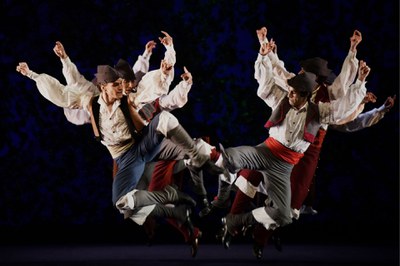
This choreography elevates the stylisation of the popular dances in which Antonio Ruiz Soler was a true maestro. In this case, Antonio reimagined the Galician muñeira through classical eyes, combining corps de ballet and pas de deux. By including touches like scallop shells and floral arches, he took Galicia’s most popular dance from the town square to theatres around the world, showcasing the harmony and poetry of Ernesto Halffter’s notes on the legend of Santa Compaña.
Murcia Auditorio y Centro de Congresos Víctor Villegas
Madrid Teatro Real
Madrid Teatro Real
Madrid Teatro Real
Madrid Teatro Real
Jerez Teatro Villamarta
Jerez Teatro Villamarta