Select your language

Saltar al contingut Saltar a la navegació Informació de contacte
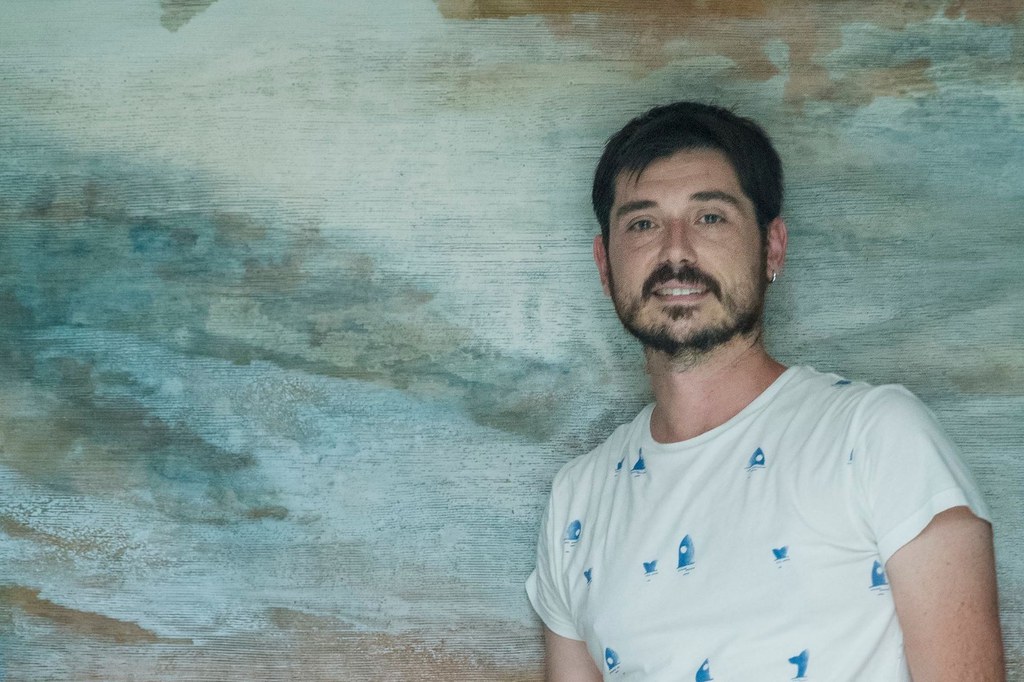
Dancer and choreographer Jon Maya (Errenteria, 1977) considers himself first and foremost a dantzari, a person trained in traditional dance. And with these foundations, rooted in tradition, he has woven a career that has taken him from the Ereintza dance group, where he began dancing at the age of six, to creating and directing the company Kukai Dantza since 2002. With the aim of creating contemporary shows based on traditional Basque dance, and through encounters with other creators, disciplines and fields, he has toured the world with his works, which in the future will have a flamenco accent.
What role does Basque folklore play in your dance style? Is it a starting point for developing contemporary dance, or do you approach the contemporary in order to update folklore? In other words: do you dance contemporary folklore, or contemporary dance with Basque roots?
I consider myself a dantzari; I am someone who trained in the field of traditional Basque dance. From the creation of Kukai Dantza, we began a journey of encounter between traditional and contemporary dance, exploring their common territories. As a dancer, my movement is traditional; it is what I have in my body because of my training. As a creator, I would say that traditional dance is the source and origin of the path we undertake in each creation, and along the way we encounter different artists, languages and artistic disciplines.
What differences are there, if any, between the dance performed in village squares and stage dance?
Many. Starting with their function: one has a social, recreational function; the other, a more aesthetic one. And that function has a direct impact on form.
What is the difference between a dancer and a dantzari, and why do you consider yourself the latter?
For me, a dantzari is someone trained in traditional dance; and my greatest training comes from there, I was born into that world. That is why I will always consider myself a dantzari.
You have been Basque champion of 'aurreskularis' seven times. The 'aurresku' is regularly danced at weddings, ceremonies, public events… Is traditional Basque dance more alive than in other places? Why?
Although the aurresku is known in the media because of this type of event, it is a much broader cycle of dances, with symbolic value. And Basque dance is also broader than the aurresku. For such a small territory, it has a very important stylistic and choreographic richness. I believe the key to dance having a social presence is for it always to be contemporary, to walk with us through time and to be incorporated into our everyday lives.
How do you combine the universality of dance with the specificity of a local tradition within a company whose shows are performed internationally? How is it received by audiences unfamiliar with the codes of Basque tradition?
Dance is dance, movement is movement. And feelings come through one technique or another. Oteiza said that the best way to be universal is to delve deeper into our roots. I identify very strongly with that. I believe international stages find elements with personality and identity in our dance, even a certain exoticism, and at the same time a way of doing things and a dialogue with the elements we live with every day. Rooted dance can be as universal as any other dance style.
Do you have any usual or recurring themes? What themes do you address in your choreographies?
We have worked with very varied themes: we have referenced artists such as Oteiza and Sarrionandia; reflected on rituals; focused on dance in its more playful function. Even an encounter between dance and football! I am very interested in encounter, constant enrichment, exploring the common spaces between different visions and relationships with various artistic disciplines. Creations are a way of communicating, a way of showing your view of the world.
Do you explore different paths outside Kukai Dantza?
I think Jon is Kukai and Kukai is Jon. Although I have explored other fields such as theatre — CDN, Teatro Español — or more personal works such as Gauekoak and Soliloquios, I see it all as part of the same line of work.
Where do you want to take your career now?
I would like to continue and deepen the line of work of recent years. Undoubtedly, I see myself more in the role of choreographer and director. I am increasingly interested in the encounter between different people, in exploring formats that go beyond the stage. As a dancer, although I was tempted not to go back on stage, I am interested in meeting people who work from their roots or have that sensitivity. Along these lines, I am going to begin a process of encounter with flamenco. The two lines of work move in the same direction, but they develop along different paths and complement each other.
How have you planned the choreography workshop with the dancers of the Spanish National Ballet?
I would like to work with them on the concept of the source; each person’s sound and movement through that concept. To do this, I will be joined by dramaturg Ximun Fuchs and composer and audio expert Xabier Erkizia. Through movement, sound and dramaturgy, we will try to seek out the different colours of the company, and from there work on bringing them together.
What lesson would you like them to take away at the end?
I would like to share a path with them and for all of us to be accomplices in this laboratory. We will not work on a technique; we will embark on a search.