Select your language
Saltar al contingut Saltar a la navegació Informació de contacte

La Bella Otero
Madrid
Madrid
Madrid
Logroño
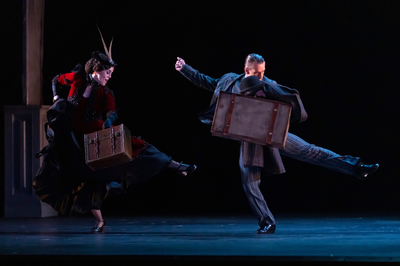
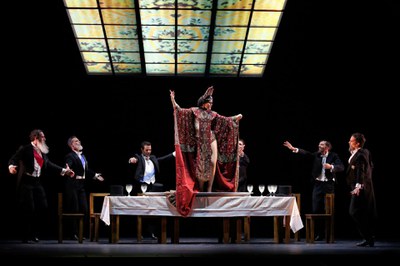
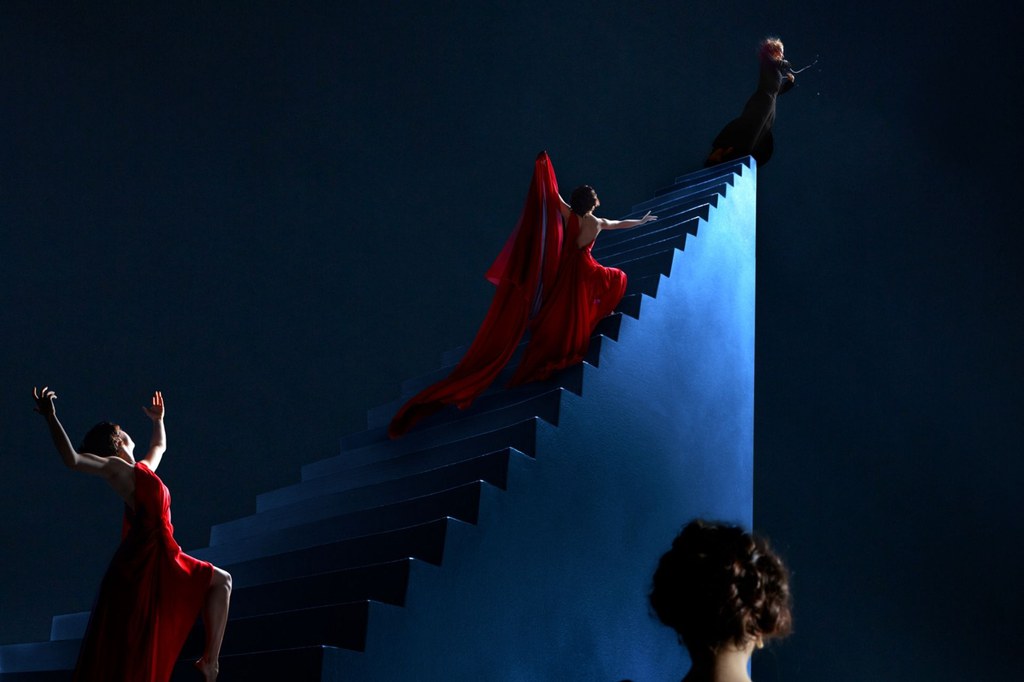
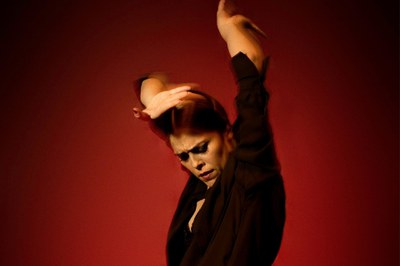
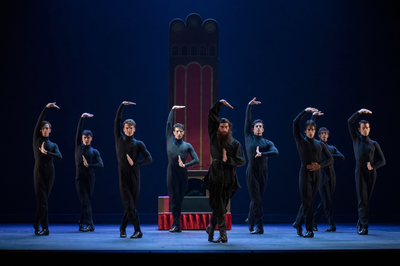
La Bella Otero can be considered an ‘operatic ballet’ in the widest sense of the word. It is a large-scale production, as much on account of the number of dancers as the range of costumes, which rigorously recreate the world of Paris’ Belle Époque (1871-1914), as well as the dramatisation of the story.
It recounts the intense life of Carolina Otero, one of the most famous and influential dancers of the late 19th century. A woman who came from a tiny village in Galicia, who invented herself following a tragic event in her childhood. She exploited men to further her artistic career and was admired by kings across Europe, but the only lover in whose arms she fell was gambling.
La Bella Otero reflects on abuse, ambition, success, the inability to love and loneliness, drawing on a variety of genres, from Spanish dance—including folklore and flamenco—to zarzuela.
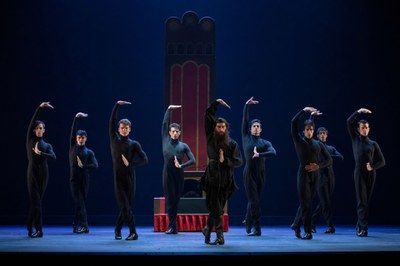
The choreography Rubén Olmo has created for La Bella Otero draws on a range of dance styles which, filtered through his own personal dance language, bring the events of each scene in the script closer to the audience. The production ranges from a muñeira rooted in Galician folklore in the pilgrimage scene to contemporary and conceptual dance in Rasputin’s trial; from a zapateado reminiscent of the musicals of Fred Astaire and Ginger Rodgers during Otero’s successful world tour to traditional Spanish dance in the performance of Bizet’s opera Carmen, which marks the protagonist’s destiny.
As the story unfolds across such a wide variety of settings and countries, the work paints a rich historical panorama of the styles prevalent at the end of the 19th century. Rubén Olmo has created his own interpretation of dances contemporary with the protagonist, such as the cancan of Parisian cabarets, the dancing of Loïe Fuller, the ethereal pioneer of modern dance, and the flamenco performed in the cafés cantantes of the period, the forerunners of today’s flamenco tablaos.
The production also includes two of the numbers that made La Bella Otero famous: the bulería, which she danced dressed as a bullfighter accompanied by ten guitarists, and the erotic dance with Arab and Indian influences with which she captivated audiences while wearing the jewels given to her by her lovers.
Direction and choreography: Rubén Olmo.
Musical direction: Manuel Busto.
Music: Manuel Busto, Alejandro Cruz, Agustín Diassera, Rarefolk, Diego Losada, Víctor Márquez, Pau Vallet and Enrique Bermúdez.
Dramaturgy: Gregor Acuña-Pohl.
Set design: Eduardo Moreno.
Costume design: Yaiza Pinillos.
Lighting design: Juan Gómez-Cornejo.
Sound design: Luis Castro.
Costume production: Cornejo.
Footwear: Gallardo.
Props and accessories: Beatriz Nieto.
Hair and wigs: Carmela Cristóbal.
Make-up design: Otilia Ortiz.
Orquesta de la Comunidad de Madrid (ORCAM) and flamenco musicians from the BNE.
Guest musicians: Alejandro Cruz, Agustín Diassera and David ‘Chupete’.
Guest artist: Patricia Guerrero
Special collaboration: Maribel Gallardo.
Acknowledgements: Carmen Solís.
La Bella Otero can be considered an ‘operatic ballet’ in the broadest sense of the term. It is a large-scale production, both in terms of the number of dancers and the lavish costumes, which meticulously recreates the world of the Parisian Belle Époque, as well as through the dramatic unfolding of the story.
It tells the intense life story of one of the most famous and influential dancers of the late 19th century, Carolina Otero. A woman from a Galician village who reinvented herself following a tragic event in her childhood. She used men to advance her artistic career and was admired by kings across Europe, but the only love into whose arms she fell was that of gambling.
“My life has been a long succession of adventures, amid rehearsals, performances, tours, dinners, parties, tributes and the pleas of lovers of all kinds. How many men have I seen sighing, weeping, demanding…! They all wore that mask of desire that transforms their faces, with wrinkles on their foreheads and that grimace on their lips… Rough or tender seducers, ironic satyrs, some shy and clumsy, others bold and playful, rich and satisfied men who could afford their whims and would not take no for an answer, greedy old men with the false hope of feeling the thrill of passion once more, as in their youth… All sick children who attached too much importance to what they could not obtain and became so carried away that they would rather die than endure the suffering caused by an unfulfilled desire. I have seen them all as selfish and pleasure-seeking, willing to make any sacrifice to satisfy their desire, yet incapable of offering a gesture of true kindness and love.”
Les Souvenirs et la Vie Intime de la Belle Otero (Memoirs of La Bella Otero), Carolina Otero and Claude Valmont, 1926.
"La Bella Otero can be regarded as a model work, for its boldness, contemporary feel, eclecticism, intentions and clarity of ideas"
"What La Bella Otero clearly demonstrates is the ability of dancers trained professionally in Spanish dance to adapt to any kind of movement they are asked to perform"
"La Bella Otero is a character who certainly deserves a good dance. There’s something about her that reminds you of the musicals performed on Gran Vía, on Broadway or in the West End"
Madrid Teatros del Canal. Sala Roja.
Madrid Teatros del Canal. Sala Roja.
Madrid Teatros del Canal. Sala Roja.
Logroño Palacio de Congresos y Auditorio de la Rioja