Select your language
Saltar al contingut Saltar a la navegació Informació de contacte

La Bella Otero
Sevilla
Sevilla
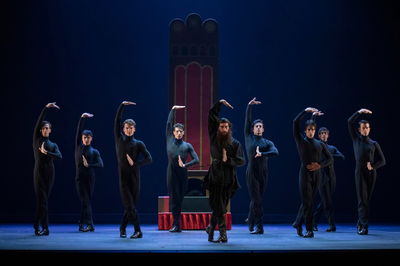
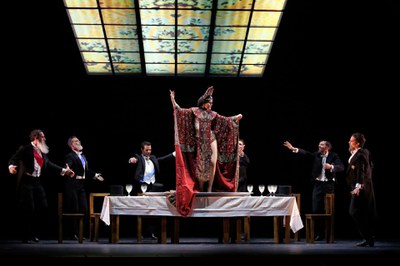
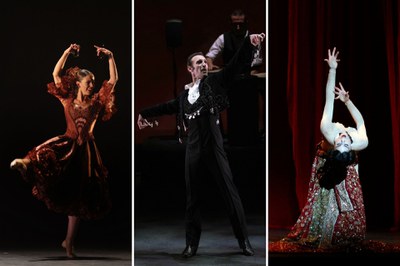
La Bella Otero can be considered an ‘operatic ballet’ in the widest sense of the word. It is a large-scale production, as much on account of the number of dancers as the range of costumes, which rigorously recreate the world of Paris’ Belle Époque (1871-1914), as well as the dramatisation of the story.
It recounts the intense life of Carolina Otero, one of the most famous and influential dancers of the late 19th century. A woman who came from a tiny village in Galicia, who invented herself following a tragic event in her childhood. She exploited men to further her artistic career and was admired by kings across Europe, but the only lover in whose arms she fell was gambling.
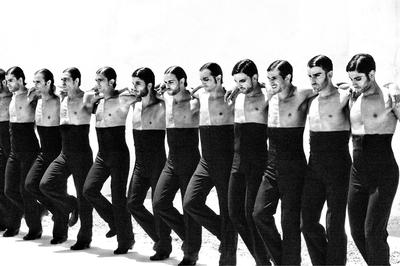
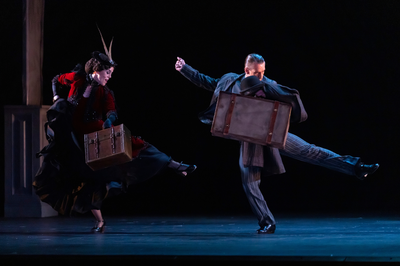
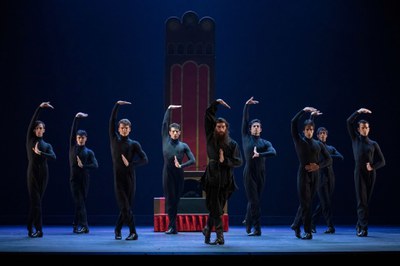
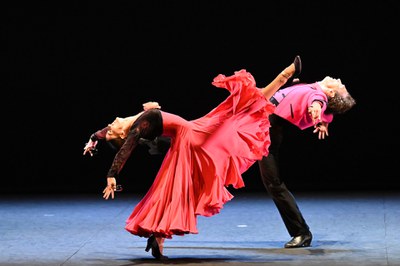
The choreography Rubén Olmo has created for La Bella Otero draws on a range of dance styles which, filtered through his own personal dance language, bring the events of each scene in the script closer to the audience. The production ranges from a muñeira rooted in Galician folklore in the pilgrimage scene to contemporary and conceptual dance in Rasputin’s trial; from a zapateado reminiscent of the musicals of Fred Astaire and Ginger Rodgers during Otero’s successful world tour to traditional Spanish dance in the performance of Bizet’s opera Carmen, which marks the protagonist’s destiny.
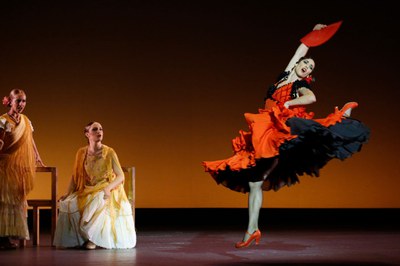
As the story unfolds across such a wide variety of settings and countries, the work paints a rich historical panorama of the styles prevalent at the end of the 19th century. Rubén Olmo has created his own interpretation of dances contemporary with the protagonist, such as the cancan of Parisian cabarets, the dancing of Loïe Fuller, the ethereal pioneer of modern dance, and the flamenco performed in the cafés cantantes of the period, the forerunners of today’s flamenco tablaos.
The production also includes two of the numbers that made La Bella Otero famous: the bulería, which she danced dressed as a bullfighter accompanied by ten guitarists, and the erotic dance with Arab and Indian influences with which she captivated audiences while wearing the jewels given to her by her lovers.
Sevilla Teatro de la Maestranza
Sevilla Teatro de la Maestranza