Select your language

Saltar al contingut Saltar a la navegació Informació de contacte
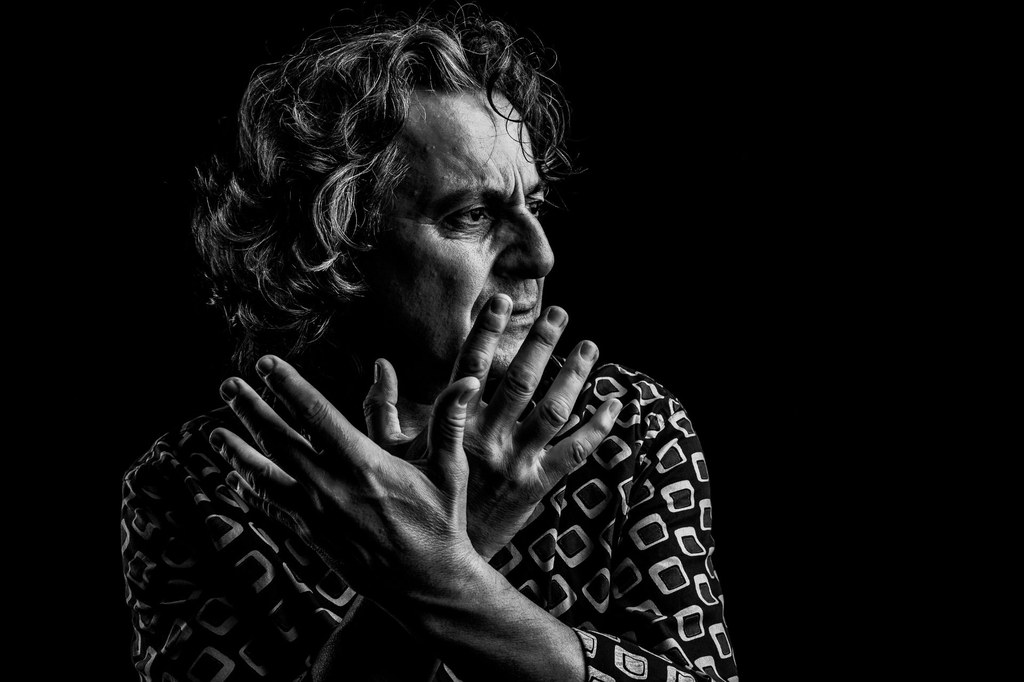
Creator of an elegant style that delves into classicism without getting lost in the superfluous, Javier Barón (Alcalá de Guadaíra, 1963) is one of today’s most renowned flamenco bailaores. Winner of the National Dance Award for Performance in 2008, he has also developed his personal way of understanding dance through the many choreographies he has created for his own company, which he founded in 1997. For these reasons, Rubén Olmo has invited him to direct the restaging with the dancers of the Ballet Nacional de España of 'De mis soleares vengo', a dance por soleá de Alcalá with which he won the Giraldillo Award at the Seville Biennial in 1988.
How did you begin as a flamenco bailaor?
It all began at school. It was the end of the school year, and my teacher asked me to dance sevillanas with a girl. She knew how to dance sevillanas, but I had no idea, and that is how it started. Those who saw me dance told my parents that I had something special. From there, my parents found a teacher so I could learn to dance sevillanas and rumbas. My first teacher was Antonio Zarandilla, with whom I studied for two years and won several sevillanas competitions. Later, I studied flamenco in Seville with Maestro Pepe Ríos. With him, I learned compás, how to dance por soleá, and some bulerías. When my uncle Manolo took me with him to Madrid, I began learning from many teachers and dancing in almost every tablao to pay for my classes. And from there, I entered the School of the Ballet Nacional de España.
You are now returning to the Ballet Nacional de España, where you danced for several years when you were very young. What was your experience here like? What memories do you have?
For me, it is a great joy to return to the place where I received my great training in every sense within dance in general. I entered the School in 1980 under the direction of Antonio Gades and, six months later, joined the Ballet Nacional de España under the direction of Antonio Ruiz Soler. I danced there for one year and returned to the company between 1984 and 1986, under the direction of María de Ávila, until I requested a leave of absence.
The experience was very important for me and for my professional training. I have wonderful memories of everything I learned. During the years I was there, I witnessed the creation of beautiful choreographic productions by great masters. I danced choreographies by Antonio Ruiz Soler, Luisillo, Mariemma, Alberto Lorca, José Granero, José Antonio, Ángel Pericet, Pedro Azorín, Juan Quintero, Victoria Eugenia “Betty”… All that knowledge later helped me create my own choreographies.
You trained with many prestigious teachers such as Ciro, and you premiered a tribute show to Vicente Escudero. Do you identify with his style? What other teachers have influenced you, or which would you recommend to young bailaores as models?
The truth is that I have been very lucky with all the teachers I have had since I started as a child: Antonio Zarandilla, Pepe Ríos, Toni El Pelao, Faico, Trini España, Tomás de Madrid, María Magdalena, Rafael de Córdoba, Manolete and Ciro. The latter taught me the most, both professionally and personally, and we shared a good friendship. He prepared the dances for me to enter the Giraldillo Dance Award competition at the 5th Seville Flamenco Biennial in 1988, at the Teatro Lope de Vega, which I won. I am very grateful to Maestro Ciro for how much he helped me at that time and for all the advice he gave me within flamenco dance. I am fortunate to have had all these teachers. I have always liked to learn as much as possible.
Vicente Escudero, who is now a great reference for many, was unknown to me, and when I was shown things by him, I was surprised by his way of dancing and by his art beyond dance as well. He became very important to me at that time, and I wanted to pay tribute to him in the show Baile de hierro, Baile de bronce, which I premiered at the 11th Seville Flamenco Biennial in 2000. I recognize myself in part of his style: in his elegance and sobriety, at once modern and contemporary.
Another teacher who influenced me greatly was Mario Maya. I saw him for the first time in the show ¡Ay! Jondo at the Sala Olimpia in Madrid. He was marvelous in dance and a great figure of flamenco.
It is difficult for me to recommend one over another.
How would you define your dance style? Do you identify with the description of your dancing as classical, free of showy effects, elegant and refined?
The truth is that I identify myself, or consider myself, within flamenco dance in everything I carry with me. The words that best define me are these, which were written about me: “Classicism with contemporary resonances. Tradition absorbed in current flamenco. Of plausible elegance. Drawing the essence of a universal art. With clearly defined and refined aesthetic lines. Rejecting superfluous effects. Of sincere bearing and humble condition. His art seeks simplicity at every moment. He makes the easy difficult. Or the difficult easy. With great work and effort. Holding nothing back. He has no lack of resources. Although he does not pursue the expected surprise or the demanded wink. A bailaor of balance. He commits to the whole. He stands on stage like a gentleman. With no arguments other than his dance. Through it, he tells us a thousand and one stories. Measure and calm. Temperance and serenity. Bullfighting reminiscences. Searching for the plainest authenticity. Without banalities. Nuancing every movement, every turn, every arm gesture. Without losing composure. In his proposals, harmony and the whole prevail. In just measure. Javier Barón, dance of measured elegance.”
You have spent years researching flamenco. What path has the art of jondo travelled up to the present day?
The truth is that I have spent so much time searching and learning things to do, and trying to contribute my little grain of sand within this world that is so large… sometimes small… but rather large. Everything has already been done, but contributing something personal of your own to flamenco makes you very happy.
Is flamenco going through a good moment?
For me, it is not doing badly, but in recent years we have lost great masters of dance, singing and guitar. It will always be necessary to return to those great masters, who taught us so much and who will always be very important pillars of flamenco. Now we have very good people, but we will have to wait a long time before we see again the kind of masters we had, with so much art, inspiration and wisdom in this great art that is flamenco.
Entre mujeres is your latest choreography, a tribute to the women in your life. What is the role of women in flamenco?
I had to do something for the women who have always been by my side, helping me, loving me and advising me in my life and in so many things that have happened to me with them. The death of my mother, three years ago now, is what made me think about creating this show.
Mother, sustenance and strength. Grandmothers and aunts, tenderness and care. Partners and loves that bring and take life. I have sought to tell the vision of the feminine universe as perceived by a man. To do so, I have surrounded myself with a carefully crafted staging, where light and images guide me through the different periods of a life. Entre mujeres includes a stage proposal with the solidity and sensitivity brought by the direction of David Fernández Troncoso, who has a long career in creating flamenco and theatre productions.
Today, fortunately, there are many artistic and flamenco works in particular in which women show themselves, speak to us, assert themselves and challenge us. Here we are facing something different, which can perfectly go hand in hand with that. A tribute, a dance of love and remembrance from an artist to the female figures that fill the evocation of his memory and his present.
Women in flamenco have enormous value, in singing, dance and guitar alike.
Dancing involves a process of refinement, comprising both technique and feeling. Is either of these two aspects more important to you?
Before, the act of dancing — I am speaking of what I experienced — was the personality of each artist, their way of dancing, with their resources, without an argument, just dance and art. For me, now there is more preparation, study and technique. But dancers are feeling; when your heart leads you, with or without technique, there is truth and beauty.
What are you going to work on with the dancers of the Ballet Nacional de España in this choreography workshop?
We are going to work on De mis soleares vengo, the dance por soleá de Alcalá. This palo, so recognized in the world of flamenco as cante grande, was born in my hometown, in the blessed land of Alcalá de Guadaíra, where Joaquín de la Paula and Manolito María created it.
What message do you want to convey to the dancers?
Above all, for me it is a source of pride and pleasure to be able to carry out this choreography workshop with the dancers of the Ballet Nacional de España, to share my personal dance, which is my beloved style, and to make it something emotional and special. I intend to explain to them how I feel it and how I do it, and to teach them my way of performing this dance. I hope these days will be a learning experience, both for them and for me.