Select your language

Saltar al contingut Saltar a la navegació Informació de contacte
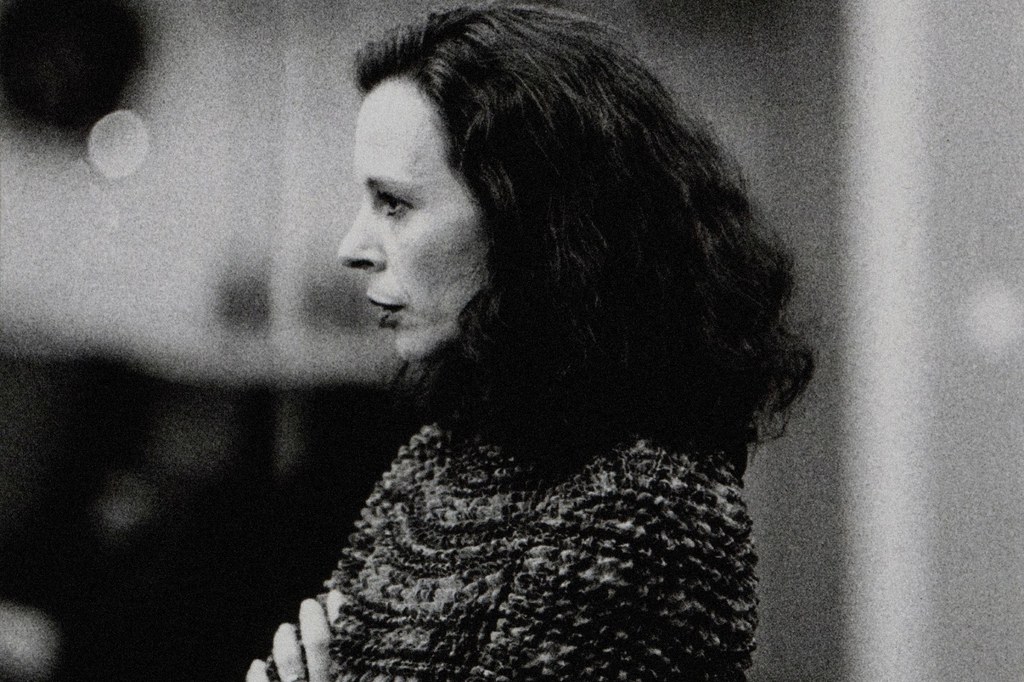
Dancer, choreographer and director of the Ballet Nacional de España from 2001 to 2004, Elvira Andrés’s professional career is linked to essential names in Spanish dance such as Mariemma and Antonio Gades. Since 2006, she has been Professor of Spanish Dance at the María de Ávila Higher Conservatory of Dance in Madrid. To celebrate International Women’s Day, we are sharing her choreography Mujeres in full. With this piece, she won Second Prize at the Madrid Spanish Dance and Flamenco Choreography Competition in 1993. With music by Emilio de Diego and Víctor Manuel Martín, the Ballet Nacional de España premiered this ensemble choreography of stylized dance in 2001.
How did Mujeres come about?
I decided to take part in the second edition of the Spanish Dance and Flamenco Choreography Competition, created in 1992, and chose to do so with a choreography that represented my way of understanding the language of stylized Spanish dance. Mujeres had a first, shorter version to meet the conditions of the competition. It was later expanded to be included in my company’s program, and this choreography became the seed of the company itself. This later version is the one I restaged for the Ballet Nacional de España in 2001.
What ideas did you want to convey in this choreography?
Mujeres speaks of the female universe, of what unites us and what separates us; of what we have in common and what makes us unique. In it, I wanted to reflect the active, working woman, who fights to find her path and to develop as a person, but also her inner voice, her intimate desires; the woman who wants to love and be loved.
How did you translate these ideas into the language of dance?
Throughout the piece, the group, the sense of unity, is very important, but individualities constantly emerge from it. It was important to me that it should be an ensemble choreography, but also that each dancer’s individuality could be seen. For that reason, the cast had to be made up of six dancers who were very different from one another, but who also worked well together. In terms of language, Spanish dance, because of its complexity, allows for these characteristics.
As director of the Ballet Nacional de España, you were preceded by other women, from María de Ávila to Aída Gómez, among others. Even so, did you have to break any gender barriers, inside or outside the company?
In dance, in general, there are more women than men, although this has not always meant that there is equality. When I began my career, in many companies men were paid more than women, even when both were at the same level. Fortunately, during my time as director I did not have to break down any barriers, but I did have to face situations of what is known as “micro-machismo”: behaviours rooted in some people that stand in the way of equality.
Is there sisterhood among female dancers, or does competitiveness prevail?
Our profession is competitive by nature; you have to bear in mind that you have to be chosen, and you spend your life auditioning.
Have you noticed any change for women in the world of dance during your professional career?
Not specifically in dance, but in society in general, we have made great progress in the fight for equality.
What is the greatest obstacle still to be overcome?
We must achieve full equality and put an end to gender-based violence. A fair society cannot allow such an atrocity.