Select your language

Saltar al contingut Saltar a la navegació Informació de contacte
Centenary Antonio Ruiz Soler will open the 26th edition of the Festival de Jerez on February 17th. Ballet Nacional de España will be accompanied by the Orquesta Bética de Cámara, conducted by Manuel Coves, and soprano Maribel Ortega.
Antonio Ruiz Soler, known as Antonio el Bailarín, renewed the way of dancing and was the most complete dancer, choreographer, and director in Spanish dance. He mastered every discipline and created productions of folklore, stylized dance, escuela bolera, and flamenco, which he performed on stage and in film and directed with his own company and with Ballet Nacional de España from 1980 to 1983. In 2021, to celebrate the centenary of his birth in Seville, the director of the Ballet Nacional de España, Rubén Olmo, designed a program that brings together faithful stagings of key works from his career, as well as creations inspired by his style. This program will open the 26th edition of the Festival de Jerez on February 17th. Ballet Nacional de España will be accompanied by the Orquesta Bética de Cámara, conducted by Manuel Coves, and soprano Maribel Ortega.
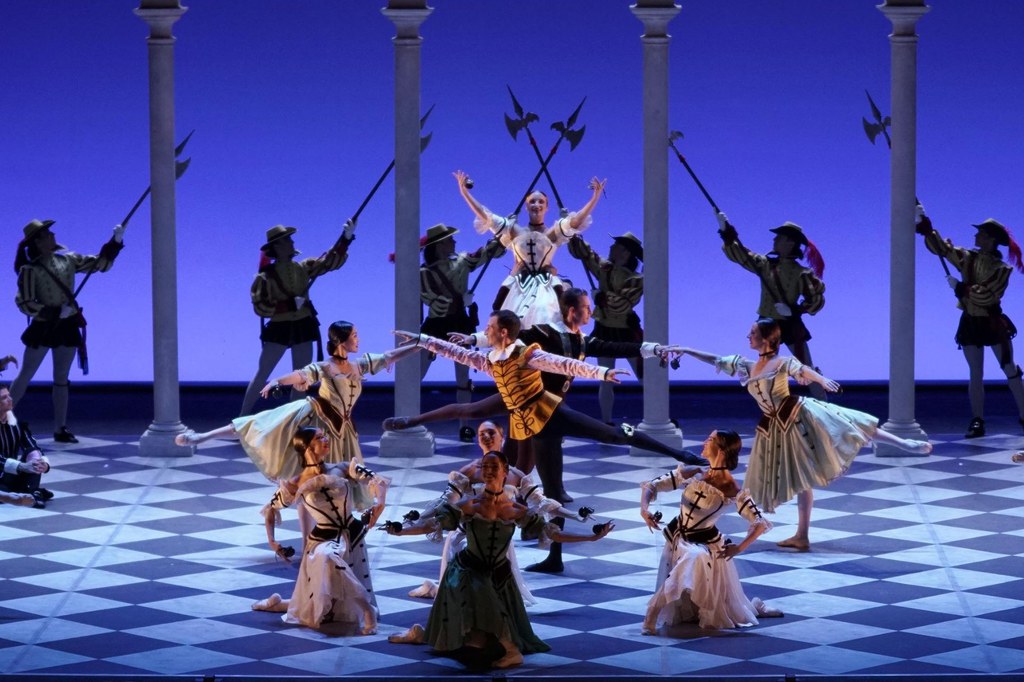
Premiered on April 15th, 2021, at the Teatro de la Maestranza in Seville, this show contains three choreographies that represent the height of Antonio’s talent in three different styles: escuela bolera, the stylization of flamenco, and stylized folklore. The first of these is represented by Sonatas, a work that had not returned to the stage in its complete form since 1982. In Sonatas, Antonio combined escuela bolera with classical dance in a highly technically complex choreography set within a palace-like scenography. Galician folklore inspired the choreographer in Fantasía galaica. With music by Ernesto Halffter, it is an ensemble piece that sublimates popular dances and endows them with great lyricism. The program also includes Antonio’s most emblematic stylized flamenco solo, Zapateado, with music by Pablo Sarasate. The list of Antonio’s choreographies included in this program is completed by Vito de gracia, a nod to Antonio’s film career and to the years he performed in Hollywood with his artistic partner Rosario.
The program Centenary Antonio Ruiz Soler also presents, under the title Estampas flamencas, new choreographies by Rubén Olmo and Miguel Ángel Corbacho that follow the master’s style and aesthetic, updating the dance of four of the flamenco forms that Antonio frequently performed: Martinete, Zorongo, Taranto, and Caracoles. The overview of Antonio’s artistic career is completed by the solo Leyenda, a choreography created by Carlos Vilán for Isaac Albéniz’s composition Asturias, another essential piece in Antonio Ruiz Soler’s shows. A collaborator of the maestro in the final years of his career, Carlos Vilán conceived Leyenda in 2016 especially for Esther Jurado, principal dancer of the Ballet Nacional de España, who now includes it in her repertoire.
The staging of these works that the Ballet Nacional de España will perform at the Festival de Jerez has sought to remain as faithful as possible to the first version of Antonio’s choreographies. The BNE’s Costume Stage Management Department has recovered and adapted the costumes for Sonatas and Fantasía galaica used in the production directed by Antonio Ruiz Soler at the Ballet Nacional de España in the 1980s. For the remaining works, pieces from the BNE’s collections have been reused, evoking the aesthetic current in the different stages of Antonio Ruiz Soler’s professional life. Among the few specific designs commissioned for this program, the black lace bata de cola worn by Esther Jurado in Leyenda (Asturias), designed by López de Santos, stands out.
The reuse of elements is also a criterion applied to the program’s set design. The Teatro Real has lent for Sonatas the arches designed by Daniel Bianco for the production Las bodas de Fígaro. Other elements, such as the curtain bearing the halberdiers’ coat of arms from that same work, have been replaced by an audiovisual projection created by José Maldonado. The bailaor and choreographer has also designed audiovisual pieces for Estampas flamencas, with each flamenco form serving as the guiding thread.
Educational workshops in Jerez
This year in Jerez, the Ballet Nacional de España is once again holding the educational Spanish dance workshops for which it was awarded the Flamenco en el Aula prize by the Regional Government of Andalusia. On this occasion, more than 200 primary and secondary school students from La Ina, San Juan de Dios, Blas Infante, Santa Isabel de Hungría, La Granja, and Fernando Savater schools will attend workshops on February 14th and 15th at Sala Compañía, led by répétiteur Maribel Gallardo; Belén Moreno, head of educational activities; and Sergio García, first dancer of the Ballet Nacional de España. On Wednesday the 16th, an inclusive workshop will be held at the same venue with students from the CEE de Sordos de Jerez and IES Caballero Bonald. While the aim of the former workshops is to introduce students to the foundations of Spanish dance and create new audiences, the inclusive workshops seek to improve the self-esteem and physical abilities of groups with disabilities.
Those attending the three workshops will also attend a rehearsal of the performance at the Teatro Villamarta on the 16th. During the workshop, they will receive as educational material the three interactive titles that the Ballet Nacional de España has published so far in the #BNEnoscuenta collection: La escuela bolera, Antonio Ruiz Soler for Young People, and Flamenco. These publications, produced with the support of Acción Cultural Española (AC/E) and the collaboration of Universidad Complutense de Madrid, allow readers, through a mobile app, to accompany the reading with videos and augmented-reality 3D animations. The three titles are also available in an easy-read version for cognitive accessibility.